



Most wellness routines are built around doing. Workouts. Skincare. Clean eating. Supplements. The wellness industry has become remarkably good at giving people more to add to their days. But there is a quieter, more powerful shift that most routines are still missing: genuine recovery.
Recovery is not a rest day on the sofa. It is the active process by which your body repairs, rebalances, and rebuilds from everything it has been carrying, whether that is intense exercise, a demanding work week, disrupted sleep, or simply the cumulative weight of modern life.
When recovery is treated as optional, everything else in a wellness routine starts working against itself. You can train consistently and still feel depleted. You can eat well and still wake up tired. The missing link, almost always, is how well you are supporting your body to restore.
Wellness culture celebrates effort. We track workouts, count steps, and optimise nutrition with precision. But the phase that actually delivers the results of all that effort gets little attention. Recovery is often reduced to "taking a day off" when in reality it is a physiological process that requires just as much intention as the work itself.
The consequences of skipping it are significant. Research published in Sports Medicine links inadequate recovery directly to overtraining syndrome, characterised by persistent fatigue, declining performance, disrupted sleep, and increased injury rates. In other words, working harder without recovering smarter will eventually produce the opposite of the results you want.
The body does not grow stronger during training. It grows stronger during recovery. Every workout creates microscopic damage to muscle fibres. Every period of stress raises cortisol. Every night of poor sleep reduces the repair that should have happened overnight. Without structured recovery, that accumulation quietly erodes how you feel, move, and function.
Recovery is not passive. The body is doing extraordinary work during this phase, if you give it the conditions to do so.
During resistance training and high-intensity exercise, small tears form in muscle tissue. These micro-tears are the stimulus for growth, but only if the body is given adequate time and support to repair them. Without proper recovery, the body stays in a catabolic state, breaking down rather than building up, and progress plateaus despite consistent effort.
Exercise and chronic stress both push the body into a sympathetic state, the physiological mode associated with fight or flight. Recovery returns the body to a parasympathetic state, the rest-and-digest mode essential for hormone balance, immune function, digestion, and restorative sleep. Staying stuck in a sympathetic state for too long contributes to elevated cortisol, poor sleep quality, and a persistent sense of being wired but tired.
The lymphatic system is one of the body's primary mechanisms for removing waste products, metabolic byproducts, and inflammatory markers from tissues. Unlike the circulatory system, it has no pump and depends entirely on movement and manual stimulation to flow. Research supports manual lymphatic drainage as an effective way to reduce inflammation, ease swelling, and accelerate recovery after both exercise and periods of elevated physical or emotional stress.
Chronically elevated cortisol contributes to muscle tension, disrupted sleep, weight retention around the midsection, and impaired immune response. Studies have demonstrated that massage therapy measurably lowers cortisol while increasing serotonin, dopamine, and oxytocin, the hormones associated with relaxation, mood, and a sense of wellbeing. This is not simply about feeling good in the moment. It represents a real shift in the body's biochemical environment.
Most people do not recognise under-recovery as the cause of how they feel. Instead, they push harder, add more, or assume the fatigue is simply normal. Some common signs that recovery is the missing piece include:
Persistent muscle soreness that does not resolve between sessions is one of the clearest indicators that the body is not completing its repair cycle. Soreness that lasts beyond 48 to 72 hours suggests cumulative load is building up faster than it can be cleared.
Waking up tired despite sleeping enough hours points to a nervous system that is not adequately shifting into restorative mode overnight. Sleep quantity is not the same as sleep quality, and chronic stress significantly degrades the latter.
Stalled progress despite consistent effort often signals the body is caught in a catabolic loop. The training stimulus is there, but the adaptation is not happening because recovery is insufficient.
A general heaviness or puffiness in the body, particularly in the legs and face, is frequently linked to sluggish lymphatic flow and fluid retention that proper drainage can help address.
Mood and motivation dips that appear without obvious cause can reflect depleted serotonin and dopamine, both of which are measurably influenced by recovery practices including massage.
Recovery done properly is not passive. It involves giving the body active, targeted support to complete the processes that training, work, and daily stress disrupt.
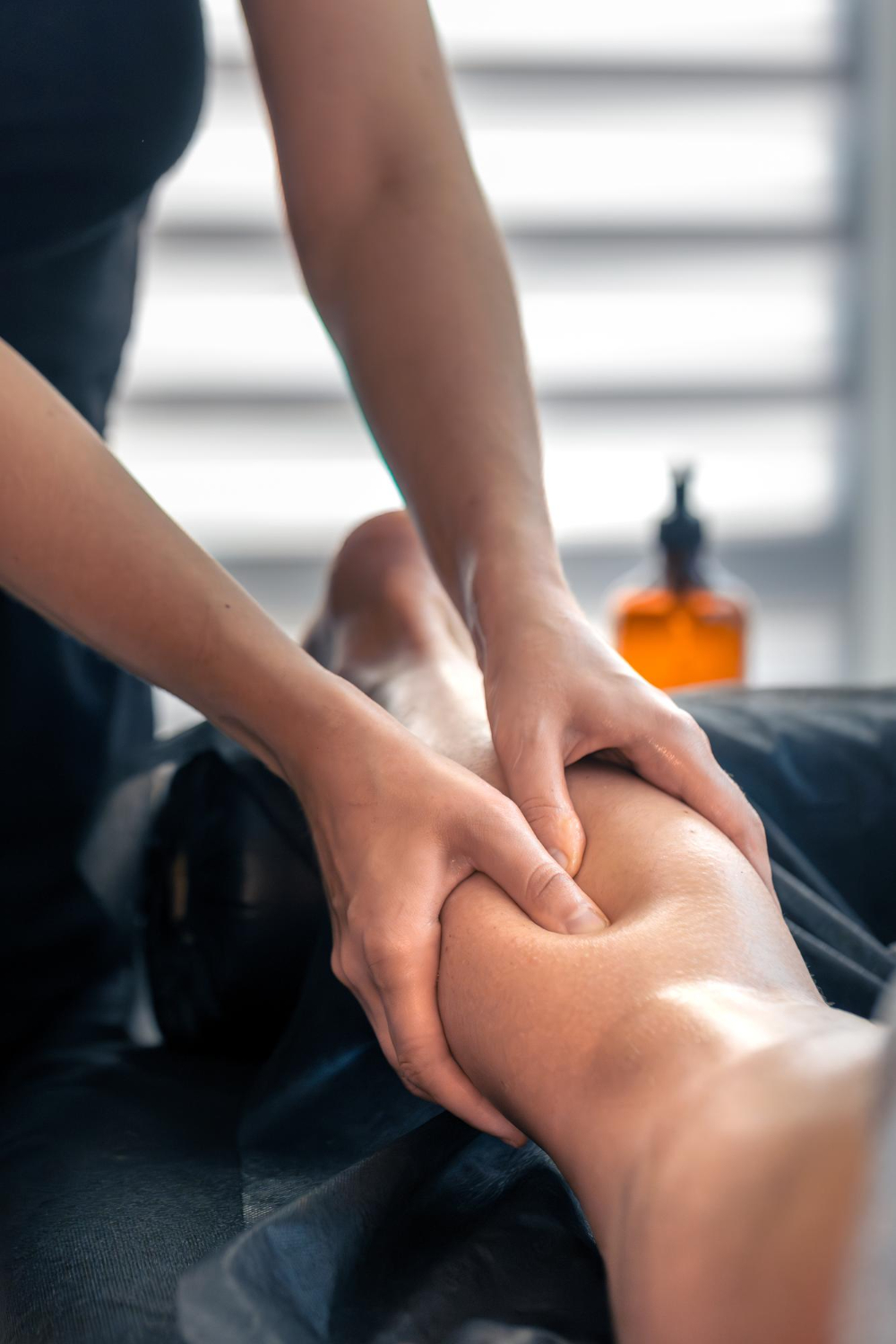
Both deep tissue massage and Swedish massage serve meaningful recovery functions, though they work differently. Deep tissue work addresses chronic muscular tension and adhesions in the deeper layers of muscle and connective tissue, while Swedish massage targets the nervous system more directly, promoting the parasympathetic shift the body needs to repair. A single deep tissue session has been shown to reduce systolic blood pressure by over 10 mmHg and significantly lower heart rate, offering measurable systemic benefit beyond the session itself.
Manual lymphatic drainage uses slow, rhythmic pressure to stimulate fluid movement through the lymphatic vessels, clearing metabolic waste, reducing inflammation, and supporting immune function. Clinical studies have shown it reduces post-exercise inflammation markers and can accelerate biological recovery timelines after both physical exertion and periods of elevated stress. Many clients describe feeling noticeably lighter and cleaner in the body after a session, which reflects what is actually happening physiologically.
Low-level wavelengths of red and near-infrared light penetrate the skin to stimulate cellular repair at the mitochondrial level. Photobiomodulation therapy supports faster tissue repair, reduces oxidative stress, and promotes skin health without UV exposure or heat. For those managing inflammation, chronic tension, or post-exercise soreness, it offers a non-invasive way to support the body's own repair mechanisms.
No amount of treatment compensates for consistently poor sleep. During deep sleep, the body releases growth hormone, repairs tissue, and consolidates neurological adaptations. Prioritising sleep quality, including limiting stimulants, reducing screen exposure before bed, and creating conditions that support a transition into parasympathetic mode, is foundational to every other recovery strategy working properly.
There is a common assumption that recovery treatments are indulgent, an add-on for people with time and money to spare. That framing misunderstands what recovery is. It is not the opposite of productivity. It is what makes sustainable performance, consistent training, and genuine wellbeing possible over time.
The body has a finite capacity to accumulate load without restoration. When that threshold is exceeded repeatedly, it does not simply feel worse. It regulates worse, heals slower, and becomes progressively harder to return to baseline. Recovery is the intervention that prevents that accumulation from compounding.
If you have been training consistently, managing stress, and prioritising your health, but still feel like something is missing, recovery is almost certainly where to look. Explore our range of massages, lymphatic drainage, and body and wellbeing treatments at Park Lane Wellness, or speak to our team about building a recovery routine that complements what you are already doing.
How is recovery different from just resting?
Rest means stopping activity. Recovery is the active physiological process of tissue repair, hormone rebalancing, and nervous system regulation that follows stress. You can rest without recovering well if the body lacks the conditions or support to complete those processes. Structured recovery treatments, adequate nutrition, and quality sleep all facilitate actual recovery in ways that passive rest alone does not.
How often should I incorporate recovery treatments?
This depends on your activity levels, stress load, and how your body responds. Those training four or more times per week typically benefit from at least one structured recovery session weekly. For people managing high workloads or chronic tension, fortnightly lymphatic drainage or massage provides meaningful support. Your practitioner can help you find a rhythm that works for your lifestyle.
Can recovery treatments help even if I don't exercise regularly?
Yes. Physical exercise is one source of physiological load, but it is far from the only one. Prolonged sitting, chronic work stress, poor sleep, and emotional pressure all create accumulation that the body needs to clear. Lymphatic drainage and massage address systemic load regardless of whether it originated in training or daily life.
What is the difference between lymphatic drainage and a regular massage?
Standard massage techniques, whether deep tissue or Swedish, work primarily on muscle tissue and the nervous system. Lymphatic drainage uses much lighter, directional pressure specifically designed to stimulate the lymphatic vessels just beneath the skin. The goal is fluid movement and waste clearance rather than muscular release. The two approaches complement each other well and are often combined in a comprehensive recovery plan.
How quickly will I notice the effects of regular recovery?
Many people notice a difference in how they feel after a single session, particularly reduced tension, improved mood, and better sleep that night. The more significant shifts in energy levels, training performance, and body composition tend to emerge over four to six weeks of consistent recovery support. Like training itself, the benefits compound over time.
Lorem ipsum dolor sit amet, consectetur adipiscing elit.


JOIN THE PARK LANE COMMUNITY
Join our community and receive exclusive wellness tips, seasonal offers, and early access to new treatments.

Experience the art of wellness








.svg)
.svg)